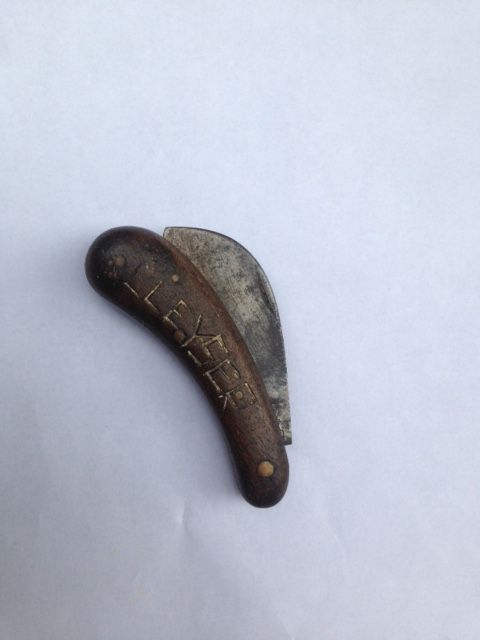
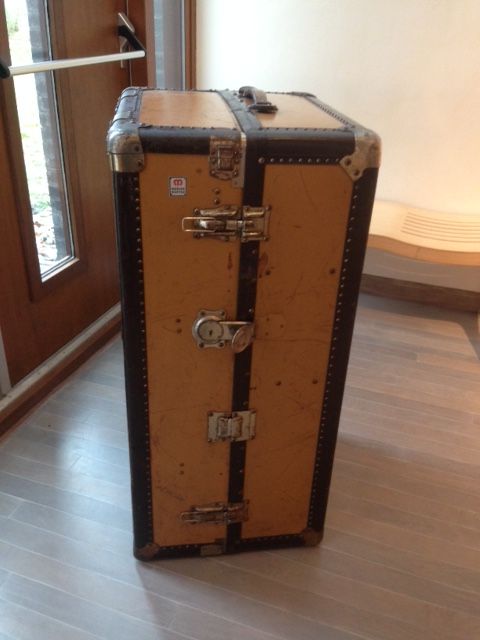
In de collectie van het Herinneringscentrum Kamp Westerbork bevinden zich een grote kastkoffer en twee snoeimessen van het gezin Leyser. Lothar en Gitta Leyser leerden elkaar kennen in het Joodse werkdorp Nieuwesluis en woonden later korte tijd in een tuinhuisje in Huizen. In 1943 ging het jonge stel met hun dochters Ürsel en Gabi via kamp Westerbork op transport naar Sobibor.
The English version and a portrait in music can be found below.
Ürsel Leyser
- Voornaam
- Judith Ursula Lea
- Achternaam
- Leyser
- Geboortedatum
- 23 januari 1942
- Geboorteplaats
- Naarden
- Sterfdatum
- 09 juli 1943
- Sterfplaats
- Sobibor
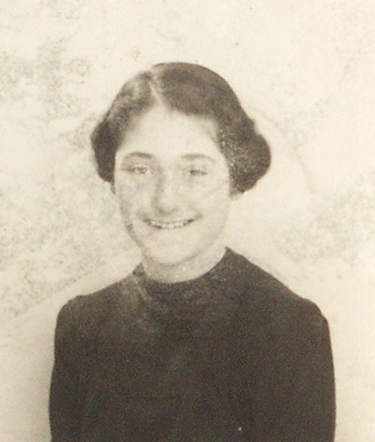
Judith Ursula Lea Leyser werd geboren op 23 januari 1942 in Naarden. Waarschijnlijk in het ziekenhuis aldaar. In die periode woonden haar ouders en haar zus in de tuin van de heer W.H. de Wette aan de Patrijslaan te Huizen. In de achtertuin stond toen een tuinhuisje, “de Kwartel”, waar Lothar Leyser en Gitta Rechnitz, de ouders van Ürsel, ongeveer een jaar verbleven. Meneer De Wette was leraar biologie aan de Gooische HBS te Bussum. Samen met zijn vrouw en andere buurtbewoners rond de Sijsjesberg in Huizen zette hij zich in voor mensen die door de oorlog in de knel kwamen. Er was moed nodig om het voor Joden op te nemen. Lothar, de vader van Ürsel, werkte als tuinman in Huizen. Zijn snoeimes waar hij zijn naam ingekerfd had is te zien op de foto. Ook van vader Lothar, moeder Gitta en zus Gabi zijn foto's, maar van Ürsel is geen foto bekend.
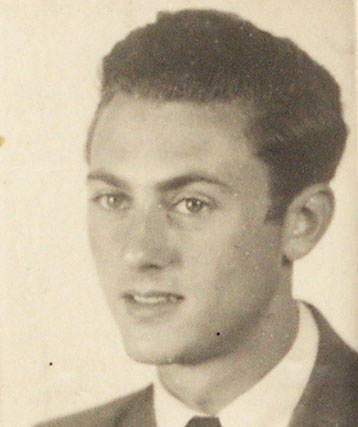
Lothar en Alice (collectie HcKW)
Presser
Van Sobibor wordt door Presser in zijn boek De Ondergang verteld, dat het doodskamp er uitzag als een vakantieoord en dat de soldaten de kleine kinderen even op schoot namen en snoepgoed gaven. Ook aan deze kleinkinderen van een snoepgoedwinkelier? “Requiescant”, hoor ik Presser herhaaldelijk brommen – met ingehouden woede, want het “in pace” laat hij telkens weg. Mogen ze rusten, in hun “graf in de lucht” (P. Celan). 
De zus van Ürsel, Gabriele Rebekka, werd op 27 oktober 1940 geboren in Amsterdam. Dichtbij grootmoeder Gertrud Schwarz in de Dintelstraat. Op de foto zit zij op schoot bij meneer De Wette achter het huis aan de Patrijslaan.
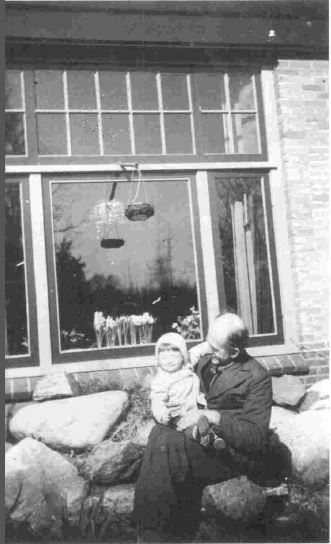
collectie HcKW
Hun ouders, Lothar en Gitta, hadden elkaar leren kennen in het Joods werkdorp Nieuwesluis waar zij werden voorbereid op emigratie naar Palestina. Dit werkdorp werd in augustus 1941 definitief gesloten. Lothar en Gitta kwamen vervolgens in Huizen terecht. Maar ook daar moesten ze eind 1942 weer weg. Een gedwongen verhuizing naar Amsterdam, waar ze terecht kwamen in het vertrouwde huurhuis van Gertrud, de moeder van Lothar, in de Dintelstraat 34hs. De Mädlerkoffer die van de moeder van Lothar is geweest bleef achter in Huizen en heeft sinds 2007 een plek in het Herinneringscentrum Kamp Westerbork.
Op een zonnige zondag, die van 20 juni 1943, werden Gabi en Ursel met hun ouders bij een van de grote elkaar opvolgende razzia’s in Amsterdam opgepakt en via het Merwedeplein en het Muiderpoortstation op de trein gezet naar Westerbork. Enkele weken later, op 6 juli 1943, werden ze op transport gesteld naar Sobibor, waar ze op 9 juli direct na aankomst alle vier, ook deze kleintjes van 2 en 1 jaar, werden vermoord.
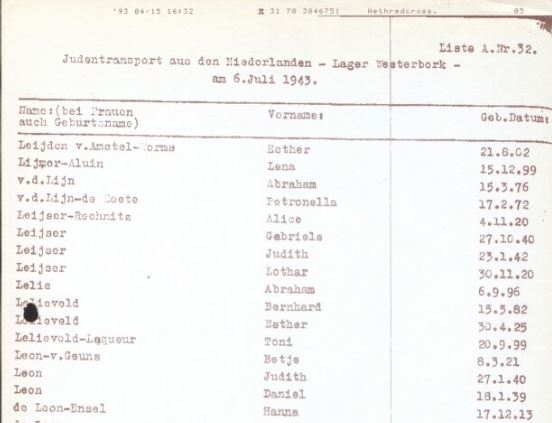
Fragment transportlijst 6 juli 1943 (https://proxy.archieven.nl/0/478CEEF4040F4BA2E0538A77ABC202B3)

English version:
The collection of the Kamp Westerbork Memorial Center includes a large trunk and two pruning knives belonging to the Leyser family. Lothar and Gitta Leyser met in the Jewish labor camp Nieuwesluis and later lived for a short time in a garden shed in Huizen. In 1943, the young couple and their daughters Ürsel and Gabi were transported via Camp Westerbork to Sobibor.
Judith Ursula Lea Leyser was born on January 23, 1942, in Naarden, probably in the local hospital. During that period, her parents and sister lived in the garden of Mr. W.H. de Wette on Patrijslaan in Huizen. At that time, there was a garden shed in the backyard, called “de Kwartel” (the Quail), where Lothar Leyser and Gitta Rechnitz, Ürsel's parents, stayed for about a year. Mr. De Wette was a biology teacher at the Gooische HBS in Bussum. Together with his wife and other residents around the Sijsjesberg in Huizen, he committed himself to helping people who were affected by the war. It took courage to stand up for Jews. Lothar, Ürsel's father, worked as a gardener in Huizen. His pruning knife, on which he had carved his name, can be seen in the photo. There are also photos of father Lothar, mother Gitta, and sister Gabi, but no photo of Ürsel is known to exist.
Ürsel's sister, Gabriele Rebekka, was born on October 27, 1940, in Amsterdam, close to her grandmother Gertrud Schwarz's home on Dintelstraat. In the photo, she is sitting on Mr. De Wette's lap behind the house on Patrijslaan.
Their parents, Lothar and Gitta, had met in the Jewish work village of Nieuwesluis, where they were preparing to emigrate to Palestine. This work village was permanently closed in August 1941. Lothar and Gitta then ended up in Huizen. But they had to leave there too at the end of 1942. They were forced to move to Amsterdam, where they ended up in the familiar rented house of Gertrud, Lothar's mother, at Dintelstraat 34hs. The Mädlerkoffer that belonged to Lothar's mother was left behind in Huizen and has been on display at the Camp Westerbork Memorial Center since 2007.
On a sunny Sunday, June 20, 1943, Gabi and Ursel were arrested with their parents during one of the large successive raids in Amsterdam and put on a train to Westerbork via Merwedeplein and Muiderpoort station. A few weeks later, on July 6, 1943, they were transported to Sobibor, where all four of them, including the little ones aged 2 and 1, were murdered immediately upon arrival on July 9.
Portraits in music:
The Prins Claus Conservatory, the Knowledge Centre Art & Society, and the Memorial Centre Camp Westerbork are developing and researching artistic and contemporary forms of commemoration and remembrance in a multi-year collaboration. From September 2025 through February 2026, the students of the Jazz Master Ensemble worked on musical portraits inspired by the lives and stories of prisoners at Camp Westerbork.
Ruixi Li – portret voor de Leyser familie – Lothar, Gitta, and their two daughters, Ürsel and Gabi.
“Hidden”
My song is a musical portrait of the Leyser family – Lothar, Gitta, and their two daughters, Ürsel and Gabi. The “portrait” is not a painting but a story told through a few objects: a trunk and a pruning knife in a museum. My music tries to give that portrait a voice.
What touched me most was the contrast between their hidden life and the brutal end. They hid in a tiny garden shed called “the Quail.” The father carved his name on a pruning knife. The two little girls, aged one and two, left almost no trace – no photo of Ürsel exists. And yet, they were found, deported, and murdered immediately upon arrival at Sobibor. That contrast – small, ordinary family love against huge historical violence – broke my heart and inspired me to write.
I chose to write a song in 5/4. A song can make names unforgettable. The title “Hidden” has two meanings: first, the family hid in a garden shed; second, their story was hidden from history for too long. For the instruments: the vibraphone gives a continious haunting tone – like memory flickering. Guitar and bass carry the warmth of family life, while drums can bring tension, like the train rolling toward Sobibor. My own voice tells the story directly, because this is a personal act of remembering.
What does the portrait tell about the person you made it for?
It tells me the Leyser family were ordinary, loving people. They were not heroes in a dramatic sense – they were a father who gardened, a mother who hid with her babies, and two children who never got to grow up. They wanted to live. Their portrait tells me that the Holocaust was not just numbers, but millions of small, precious lives like theirs.
What does it tell about you?
It tells that I believe music can be a form of memory. I cannot bring them back, but I can refuse to let their names disappear. Choosing to write and sing “Hidden” means I have decided to listen to their silence and turn it into sound. It also tells that I pay attention to small details – the knife, the shed, the missing photograph – because those are where humanity truly hides.